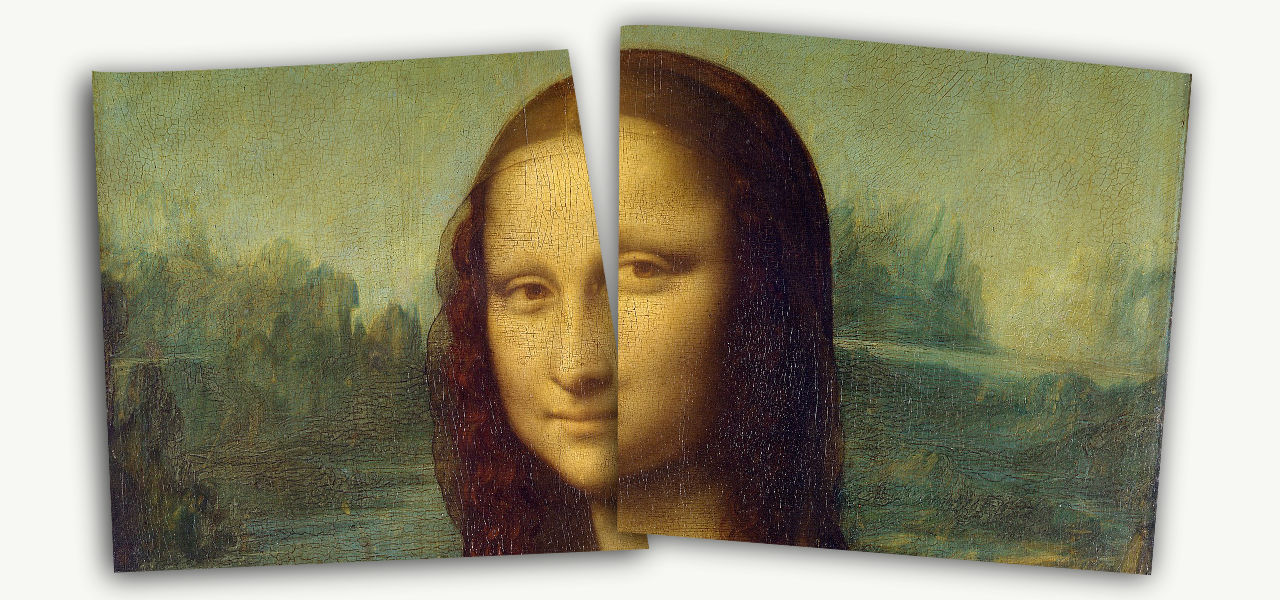
The U.S. Department of Education proposed new rules in April 2026 to change how colleges and their programs get access to federal student loans (called Direct Loans). The rules are part of the “One Big Beautiful Bill Act” bill signed by President Trump back on July 4, 2025. As written the bill will seriously hurt art schools and artists.
Click the links below to view the new rules:
Regulation for Federal Financial Assistance
The government is saying: “If your graduates don’t earn enough money, your school loses access to federal student loans.”
Here’s how it works:
This is where it gets serious.
The core problem: Art and design graduates often earn less in their early careers than graduates of business, engineering, or healthcare programs. That’s just the reality of those fields — especially in the first 4 years after graduation.
Under this law:
Eliminating Fixed Amount Awards (§§ 200.201, 200.333) Fixed amount grants are common in the arts because they’re simple — a school or artist gets a set amount with minimal paperwork. This rule eliminates them. Every grant would now require financial reporting and cost monitoring. For small arts organizations and individual artist grant recipients, this adds significant administrative burden.
Merit-Based Selection Tightened (§§ 200.204–200.206) Grant applicants with a history of “questionable practices or poor financial management” can be screened out. Art schools with thin balance sheets, late audits, or prior compliance issues — common at smaller institutions — become more vulnerable to being passed over entirely.
No-Discrimination Funding Conditions (§§ 200.218–200.220, 200.300) Grant funds cannot be used for purposes “inconsistent with law and Executive Branch policy.” Given the current administration’s executive orders on DEI and “unlawful discrimination,” this is a direct threat to arts grants that fund diversity-focused programs, residencies for underrepresented artists, or community arts initiatives with equity components.
Easier Grant Termination (§ 200.340) The government is explicitly clarifying its right to terminate discretionary grants mid-award if they’re deemed inconsistent with “program goals or agency priorities.” For a school or artist mid-project on a federal grant, this means funding can be pulled at any time for policy reasons — not just performance failures.
Stricter Subaward Tracking (§§ 200.329–200.332) Pass-through grants — where a university receives federal money and redistributes it to individual artists, student programs, or community partners — now face stricter reporting requirements. This makes it harder and costlier to run artist fellowship programs, student stipends, or community residencies funded through federal pass-throughs.
Combined with the STATS earnings rule, this creates a two-front squeeze:
Art schools are especially exposed because they tend to be smaller, have leaner financial operations, rely on grant pass-throughs for student and community programs, and run programming that may be politically targeted under the new “consistent with Executive Branch policy” language.
This law treats art education like a job training program. It judges the value of a BFA in illustration or a degree in graphic design the same way it judges a nursing or accounting degree — by paycheck size, 4 years out.
Schools could be forced to kill programs, shrink enrollment, or shut down entirely if their graduates don’t hit salary benchmarks — regardless of long-term career success, freelance income, or the cultural value of the work.
Now let me fetch the section with the specific earnings threshold numbers.Let me search for the specific earnings threshold numbers and recent data on what art/design graduates earn.Good — now I have everything needed. Let me build both the thresholds breakdown and the public comment.
The government compares what your graduates earn 4 years after finishing a program against a benchmark. Here’s the critical change:
Old rule: Graduate earnings were compared to what people with just a high school diploma earn.
New rule: Graduate earnings are now compared to the median salary of working adults aged 25–35 who hold a bachelor’s degree. That’s a much higher bar.
The BLS reports the overall median wage for all college degree holders is about $70,000 per year. That’s the range art and design programs would have to compete against.
Here’s the problem. Look at what art graduates actually earn:
| Program Type | Typical Earnings 4 Years Out | Likely Pass/Fail |
|---|---|---|
| Fine Arts (BFA) | ~$36,000 | 🔴 FAIL |
| Fine & Performing Arts (all majors) | ~$50,000 | 🟡 Borderline |
| Craft & Fine Artists (experienced) | ~$56,260 | 🟡 Borderline |
| All bachelor’s degree holders | ~$70,000 | ✅ The benchmark |
The typical early career salary for a BFA graduate is about $28,540, climbing to $36,248 within five years. That’s nowhere near $70,000 at the 4-year mark when the government takes its snapshot.
Fine arts majors also experience a high underemployment rate early in their careers — as high as 58.4% — and many work part-time. Many artists and designers build income through freelance, licensing, and gig work — income that’s harder to capture cleanly in IRS W-2 data, which is what the government proposes to use as its data source.
The public comment period officially closed May 20, 2026, but the docket remains open for viewing. 9,994 comments were submitted.